 English
 Esperanto
  Afrikaans
  Català
  שפה עברית
  Cymraeg
  Galego
  Latviešu
  icelandic
  ייִדיש
  беларускі
  Hrvatski
  Kreyòl ayisyen
  Shqiptar
  Malti
Malti  lugha ya Kiswahili
  አማርኛ
አማርኛ  Bosanski
  Frysk
Frysk  ភាសាខ្មែរ
  ქართული
  ગુજરાતી
  Hausa
Hausa  Кыргыз тили
  ಕನ್ನಡ
ಕನ್ನಡ  Corsa
Corsa  Kurdî
Kurdî  മലയാളം
  Maori
Maori  Монгол хэл
  Hmong
Hmong  IsiXhosa
  Zulu
Zulu  Punjabi
  پښتو
پښتو  Chichewa
  Samoa
Samoa  Sesotho
  සිංහල
සිංහල  Gàidhlig
  Cebuano
  Somali
  Тоҷикӣ
  O'zbek
  Hawaiian
  سنڌي
سنڌي  Shinra
  Հայերեն
  Igbo
Igbo  Sundanese
  Lëtzebuergesch
  Malagasy
  Yoruba
  অসমীয়া
  ଓଡିଆ
ଓଡିଆ  Español
  Português
  русский
  Français
  日本語
日本語  Deutsch
  tiếng Việt
  Italiano
  Nederlands
  ภาษาไทย
  Polski
  한국어
한국어  Svenska
  magyar
  Malay
Malay  বাংলা ভাষার
  Dansk
Dansk  Suomi
Suomi  हिन्दी
  Pilipino
  Türkçe
  Gaeilge
  العربية
  Indonesia
  Norsk
Norsk  تمل
تمل  český
český  ελληνικά
  український
  Javanese
  فارسی
فارسی  தமிழ்
தமிழ்  తెలుగు
  नेपाली
  Burmese
  български
  ລາວ
ລາວ  Latine
  Қазақша
  Euskal
  Azərbaycan
  Slovenský jazyk
  Македонски
  Lietuvos
  Eesti Keel
  Română
  Slovenski
  मराठी
मराठी  Srpski језик


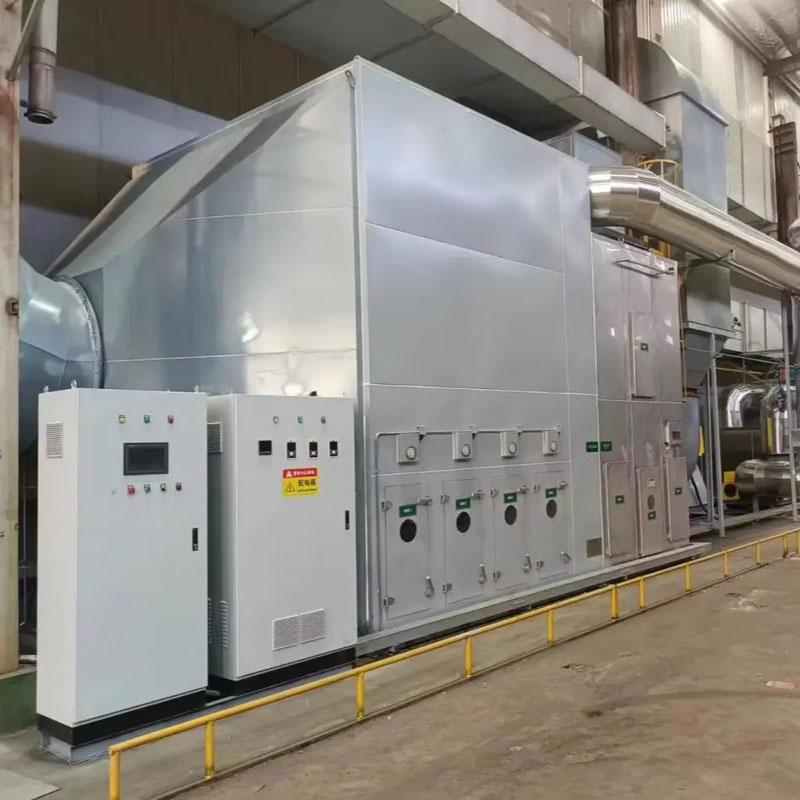
VOC Treatment Equipment: A Practical Guide to Selection, Technology, and Operation
Volatile Organic Compounds (VOCs) are a major source of industrial air pollution, contributing to smog, health hazards, and strict regulatory fines. For plant managers and EHS (Environment, Health, and Safety) professionals, choosing the right VOC treatment equipment is not just about compliance; it is a strategic decision that affects operating costs, safety, and production uptime.
1. Understanding Your Waste Stream: The Foundation of Selection
Before evaluating any equipment, you must thoroughly characterize your exhaust gas. Selecting a system without this data is a common and costly mistake. Key parameters include:
-
Composition and Concentration: What specific VOCs are present (e.g., aromatics like benzene, alcohols, ketones, or halogenated hydrocarbons)? Is the concentration high (>1,000 mg/m³) or low (<500 mg/m³)?
-
Flow Rate: Is it a large volume, low-concentration stream (e.g., >10,000 m³/h from a paint booth) or a small volume, high-concentration stream (e.g., from a chemical reactor)?
-
Temperature and Humidity: High humidity can cripple adsorption systems, while high-temperature exhaust can be an asset for combustion systems.
-
Particulate and Poison Content: The presence of dust, oil mist, or catalyst poisons (like sulfur or silicones) dictates the need for upstream pre-treatment.
2. The Main Technology Families
Here is a breakdown of the primary treatment technologies and where they excel:
A. Thermal Oxidizers (RTO & CO)
These systems destroy VOCs through high-temperature chemical oxidation.
-
Regenerative Thermal Oxidizer (RTO): The workhorse for large-volume, low-to-medium concentration streams. RTOs use ceramic media to capture and recycle heat, achieving >95% thermal energy recovery and >99% destruction efficiency . They are ideal for applications like chemical processing, coating, and printing. However, they have a high initial investment and significant weight/space requirements.
-
Catalytic Oxidizer (CO): Uses a catalyst to oxidize VOCs at a lower temperature (approx. 450°C) than an RTO. This significantly reduces fuel consumption. Key consideration: the inlet gas must be free of catalyst poisons (like sulfur or metals) to maintain performance over the typical 5+ year catalyst lifespan .
B. Adsorption & Solvent Recovery
This approach captures VOCs without combustion, enabling solvent reuse.
Fixed-Bed Carbon Adsorption: A proven method for low-to-medium concentrations. VOCs are trapped on activated carbon. When saturated, the carbon is either replaced (generating hazardous waste) or regenerated on-site. This is common in solvent recovery operations.Advanced Mobile-Bed Adsorption: For large-scale solvent recovery (e.g., in PVC glove manufacturing), mobile-bed systems provide continuous operation. Saturated activated carbon is automatically removed and sent to a regeneration unit (using hot nitrogen or steam), while regenerated carbon is returned to the adsorber. This achieves >98% removal efficiency and can generate significant revenue from recovered solvents .
Resin Adsorption: A specialized technology particularly effective for treating high-concentration organic solvent vapors in the pharmaceutical and chemical industries. Resin materials adsorb VOCs, and steam desorption allows for high-purity solvent recovery .
C. Specialized Combinations (e.g., RTO + SCR)
When dealing with specific, problematic compounds, a single technology isn't enough.
-
RTO + SCR: If your exhaust contains nitrogen-containing compounds (e.g., amines), combustion in an RTO produces nitrogen oxides (NOx). In this case, an RTO must be paired with Selective Catalytic Reduction (SCR) to eliminate both VOCs and NOx to meet stringent emissions standards.
-
RTO + Quench + Alkaline Scrubber: For sulfur-containing VOCs (common in chemical fiber plants), oxidizing them in an RTO produces sulfur dioxide (SO2). The exhaust must be rapidly quenched to a safe temperature and then passed through an alkaline scrubber to neutralize and remove the acidic SO2, preventing acid rain precursors and equipment corrosion.
Key Selection Criteria
When evaluating bids from suppliers, consider these practical factors:
Full Cost Accounting: Don't just look at the purchase price. Calculate the Total Cost of Ownership (TCO), which includes:Energy consumption: RTOs often have higher fan and fuel costs than RCOs, though high heat recovery (RTO >95%) minimizes fuel use.
Consumables: Costs for activated carbon replacement, catalyst replacement (every 3-5 years for CO), and alkaline scrubber chemicals.
Maintenance: RTOs have few moving parts but require periodic cleaning of ceramic media. RCOs require catalyst monitoring.
Safety: VOCs are often flammable. All equipment must have robust safety systems. For RTOs, ensure there are explosion vents, flame arrestors, and a system to dilute the gas if the concentration exceeds 25% of the Lower Explosive Limit (LEL). For carbon adsorbers, automatic temperature sensors are critical to prevent spontaneous combustion .
Flexibility: Can the system handle future process changes? Zeolite rotor concentrators, for example, are versatile for fluctuating VOC compositions.
Footprint: Consider your available space. Biofilters require large plots, while RTOs and RCOs are more compact but have significant weight, which is critical for rooftop installations.
4. Operational Best Practices
- Pre-Treatment is Key: Never send raw, dirty gas into your expensive equipment. Install proper particulate and oil-mist filters upstream to protect catalysts and activated carbon .
- Regular Maintenance: For RCOs, perform catalyst sampling and analysis every 3-5 years to check for poisoning. For SVE or adsorption systems, adhere to a strict schedule for oil changes on blowers and draining knockout tanks to ensure system reliability .
-
Monitor and Verify: Install continuous monitoring systems at the outlet to confirm performance. As seen in successful case studies, maintaining an outlet concentration of <10 ppm for over three years is possible with proper design and maintenance .
Selecting VOC treatment equipment is a complex but manageable task. By starting with a clear analysis of your exhaust gas, understanding the strengths and limitations of each technology, and rigorously assessing the total cost and safety requirements, you can invest in a system that ensures compliance, enhances safety, and contributes positively to your operational bottom line.
Send Inquiry



X
We use cookies to offer you a better browsing experience, analyze site traffic and personalize content. By using this site, you agree to our use of cookies.
Privacy Policy