 English
 Esperanto
  Afrikaans
  Català
  שפה עברית
  Cymraeg
  Galego
  Latviešu
  icelandic
  ייִדיש
  беларускі
  Hrvatski
  Kreyòl ayisyen
  Shqiptar
  Malti
Malti  lugha ya Kiswahili
  አማርኛ
አማርኛ  Bosanski
  Frysk
Frysk  ភាសាខ្មែរ
  ქართული
  ગુજરાતી
  Hausa
Hausa  Кыргыз тили
  ಕನ್ನಡ
ಕನ್ನಡ  Corsa
Corsa  Kurdî
Kurdî  മലയാളം
  Maori
Maori  Монгол хэл
  Hmong
Hmong  IsiXhosa
  Zulu
Zulu  Punjabi
  پښتو
پښتو  Chichewa
  Samoa
Samoa  Sesotho
  සිංහල
සිංහල  Gàidhlig
  Cebuano
  Somali
  Тоҷикӣ
  O'zbek
  Hawaiian
  سنڌي
سنڌي  Shinra
  Հայերեն
  Igbo
Igbo  Sundanese
  Lëtzebuergesch
  Malagasy
  Yoruba
  অসমীয়া
  ଓଡିଆ
ଓଡିଆ  Español
  Português
  русский
  Français
  日本語
日本語  Deutsch
  tiếng Việt
  Italiano
  Nederlands
  ภาษาไทย
  Polski
  한국어
한국어  Svenska
  magyar
  Malay
Malay  বাংলা ভাষার
  Dansk
Dansk  Suomi
Suomi  हिन्दी
  Pilipino
  Türkçe
  Gaeilge
  العربية
  Indonesia
  Norsk
Norsk  تمل
تمل  český
český  ελληνικά
  український
  Javanese
  فارسی
فارسی  தமிழ்
தமிழ்  తెలుగు
  नेपाली
  Burmese
  български
  ລາວ
ລາວ  Latine
  Қазақша
  Euskal
  Azərbaycan
  Slovenský jazyk
  Македонски
  Lietuvos
  Eesti Keel
  Română
  Slovenski
  मराठी
मराठी  Srpski језик


How Do Trailer Axles Work? Understanding the Core Component of Semi-Trailers
When people think about semi-trailers, they usually focus on the cargo body, wheels, or towing system. However, one of the most important components supporting transportation performance is often hidden underneath the trailer — the trailer axle.
As a key part of Semi-Trailer Parts Trailer Axles, trailer axles directly affect load support, driving stability, braking performance, and overall transportation safety. Whether used for container transport, logistics, construction materials, or heavy-duty hauling, a reliable axle system is essential for efficient operation.
So, how does a trailer axle work, and why is it such an important part of modern transportation equipment?
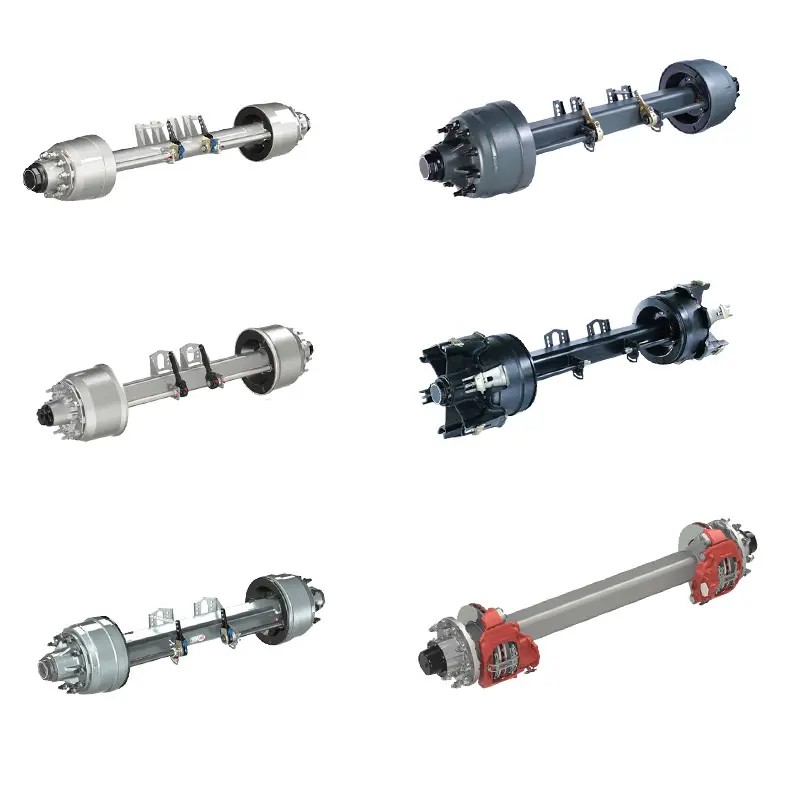
What Is a Semi-Trailer Axle?
A semi-trailer axle is a structural component that connects the trailer wheels and supports the weight carried by the trailer.
Unlike vehicle axles in powered trucks, most trailer axles do not transfer engine power. Their main functions are:
- Supporting trailer load weight
- Connecting wheels to the trailer structure
- Maintaining wheel alignment
- Supporting braking systems
- Improving driving stability
Depending on trailer design and transportation requirements, semi-trailer axles can be configured with different capacities, suspension systems, and braking solutions.
How Does a Trailer Axle Work?
The working principle of a trailer axle is based on load distribution and wheel movement control.
The basic process is:
Cargo weight
↓
Trailer frame transfers load
↓
Axle supports and distributes weight
↓
Wheels maintain contact with the road
↓
Trailer moves safely during transportation
When the trailer travels on different road surfaces, the axle system helps manage forces caused by cargo weight, vibration, braking, and turning.
Main Components of a Trailer Axle
A trailer axle is not just a single metal beam. It is a complete mechanical assembly consisting of multiple components.
1. Axle Beam
The axle beam is the main load-bearing structure. It is designed to withstand bending forces caused by heavy cargo.
2. Wheel Hubs
Wheel hubs connect the axle assembly with the wheels and allow smooth rotation during operation.
3. Bearings
Bearings reduce friction between moving parts and help wheels rotate efficiently.
4. Brake System Components
Many trailer axles are equipped with drum brakes or disc brakes to improve stopping performance.
5. Suspension Connection Points
The axle connects with the suspension system, helping absorb road impacts and improve ride stability.
Why Are Trailer Axles Important for Semi-Trailers?
A semi-trailer may carry thousands of kilograms of cargo, which means the axle system must handle continuous heavy loads.
A properly designed trailer axle provides:
- Better load distribution
- Improved vehicle stability
- Reduced tire wear
- Reliable braking performance
- Longer service life
Different Types of Semi-Trailer Axles
Mechanical Suspension Axle
Mechanical suspension axles use traditional spring suspension systems. They are widely used because of their simple structure and durability.
Common applications include:
- Flatbed trailers
- General cargo trailers
- Heavy-duty transportation
Air Suspension Axle
Air suspension axles use air springs to improve vibration control and driving comfort.
They are often used for applications requiring better cargo protection and smoother operation.
Heavy-Duty Trailer Axle
Heavy-duty axles are designed for demanding transportation environments where higher load capacity is required.
Typical applications include:
- Mining transportation
- Construction equipment hauling
- Oversized cargo transport
Trailer Axle vs Truck Axle: What Is the Difference?
| Feature | Trailer Axle | Truck Axle |
|---|---|---|
| Main Function | Supports trailer load and wheels | Supports vehicle load and may transfer driving power |
| Power Transmission | Usually no engine power transfer | May transfer engine power to wheels |
| Installation Position | Located on trailer chassis | Part of truck vehicle structure |
| Design Focus | Load support and stability | Load support and vehicle movement |
| Application | Semi-trailers and transport trailers | Trucks and powered vehicles |
The Engineering Behind Strong Trailer Axles
Heavy-duty trailer axles need to handle repeated stress during transportation. Their performance depends on material selection and manufacturing technology.
Important factors include:
- High-strength steel materials
- Precision machining
- Heat treatment processes
- Accurate dimensional control
- Reliable welding technology
How Does Axle Design Affect Transportation Performance?
The design of a trailer axle influences several important aspects of transportation.
Load Capacity
A properly matched axle helps distribute cargo weight evenly and prevents excessive stress on trailer components.
Driving Stability
Axle alignment and suspension design affect how smoothly a trailer follows the towing vehicle.
Tire Performance
A well-designed axle system helps maintain proper wheel positioning, reducing uneven tire wear.
Common Trailer Axle Problems
Like other mechanical components, trailer axles require regular inspection and maintenance.
Common issues include:
- Bearing damage
- Brake wear
- Wheel alignment problems
- Axle deformation caused by overload
- Lubrication problems
How to Extend the Service Life of Trailer Axles?
Proper maintenance can improve axle reliability and reduce operating costs.
- Check bearings regularly
- Inspect brake components
- Avoid overloading trailers
- Maintain proper lubrication
- Check wheel alignment
The Future Development of Trailer Axle Technology
With the development of modern transportation, trailer axle technology continues to improve.
Future trends may include:
- Lightweight axle designs
- Smart monitoring systems
- Improved energy efficiency
- Advanced suspension technologies
- Better durability for heavy-duty applications
Conclusion
Trailer axles are one of the most important structural components of semi-trailers. Although they are hidden beneath the trailer body, they play a critical role in supporting cargo, maintaining stability, and ensuring safe transportation.
From mechanical suspension axles to advanced air suspension systems, modern trailer axle technology continues to evolve to meet the growing demands of logistics and heavy-duty transportation.
Understanding how trailer axles work helps businesses and operators better maintain equipment, improve efficiency, and choose suitable solutions for different transportation needs.
Send Inquiry



X
We use cookies to offer you a better browsing experience, analyze site traffic and personalize content. By using this site, you agree to our use of cookies.
Privacy Policy